
MAKEBI ZULU EXPOSES UPND FLAWS, OFFERS HARD ECONOMIC RESET
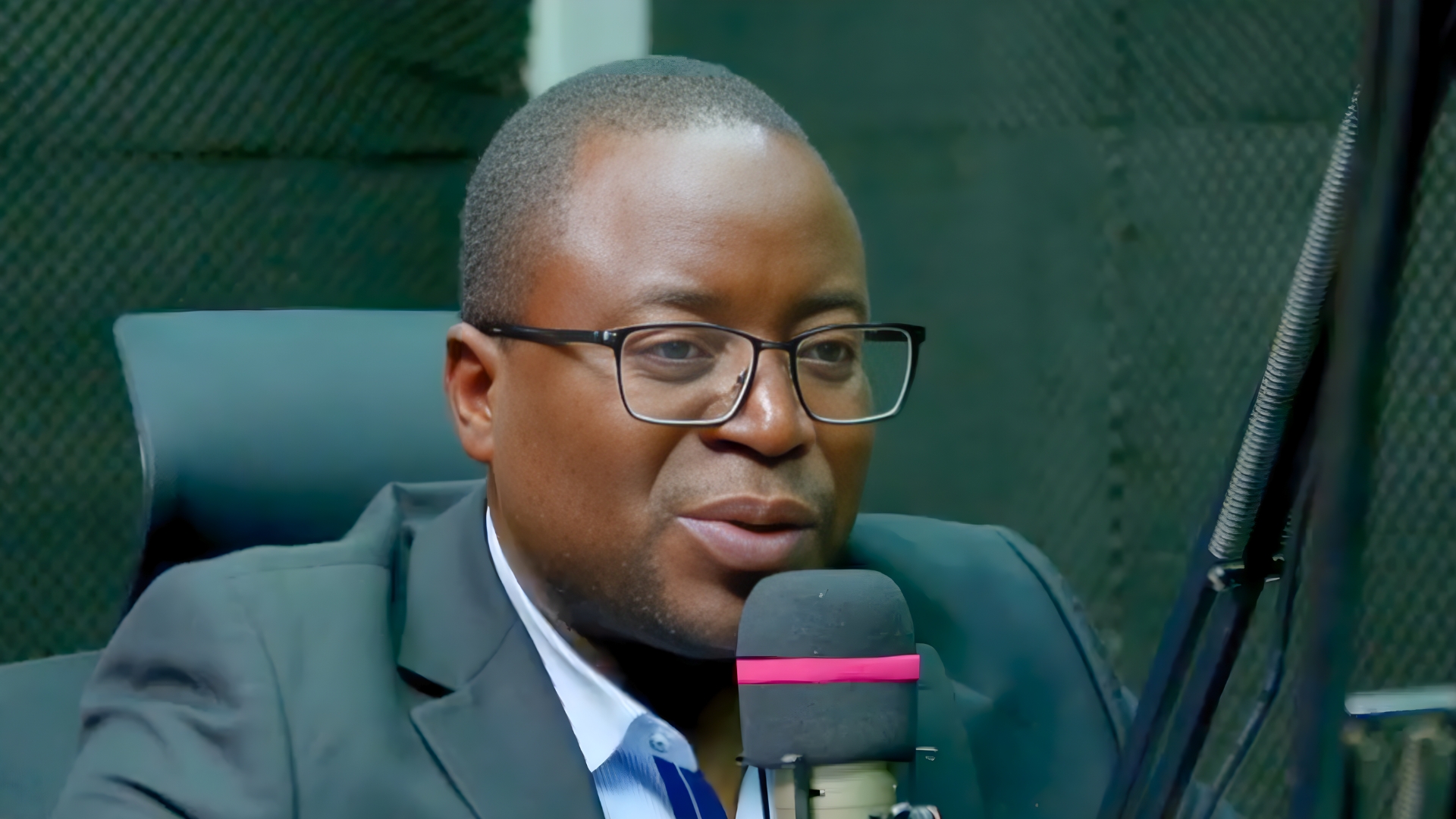
Leading Presidential Candidate Honourable Makebi Zulu featured on 5FM Radio’s The Burning Issue, hosted by Zachariah Banda, on Tuesday morning, where he delivered one of his clearest and most forceful public cases yet against the UPND administration. Speaking with the confidence of a man who has precisely diagnosed how the country is being badly mismanaged, the renowned Lusaka lawyer, former Minister for Eastern Province, and spokesperson for the Lungu family accused the UPND government of wasting time on political persecution while Zambia sinks deeper into economic pain.
Uninterested in decorative politics, Makebi Zulu sounded the alarm to the country that the house is burning while those in charge are busy chasing shadows.
Makebi Zulu’s central argument was simple: the government should be lowering the cost of living, fixing roads, supporting farmers, opening doors for youths, and helping women in business, instead of spending its energy weakening the opposition and shrinking democratic space. In his view, that is not governance. That is evasion.
He accused the UPND of trying to win politics through state pressure rather than performance. Instead of defeating the opposition through delivery, he said, the government appears more interested in arrests, intimidation, and making dissent look criminal. That point formed the spine of his intervention. He was not merely attacking policy failure. He was accusing the administration of abandoning the very spirit of democratic rule.
And on the economic question, he came out swinging.
Makebi Zulu argued that ordinary citizens do not need government speeches and graphs for survival. Instead, UPND has delivered rising prices, shrinking opportunities, joblessness, and suffocating frustration. He said the cost of living has not come down but has gone up under UPND, and that life is becoming more expensive by the day. For many Zambians, that is not solved by speeches and graphs. They are struggling with meals, bus fare, mealie meal, school fees, and the daily humiliation of trying to stretch money that no longer stretches.
From there, he turned to youth unemployment and the struggles of women in business, asking what exactly the government is doing to create a fair and functioning economy. It was a sharp and necessary line of attack. Any government can advertise GDP figures. But a hungry household does not eat GDP. A jobless graduate does not survive on macroeconomic slogans. A struggling marketeer does not build capital from press statements.
Makebi Zulu’s answer to this malaise is a local-first economic philosophy anchored in productive participation by Zambians themselves. He argued that government procurement should prioritise Zambians in the supply of goods and services. Where local players do not yet have full capacity, he said they should still be at the centre of the transaction, partnering with foreigners in a way that ensures value passes through Zambian hands before it reaches the state. That is a serious political idea because it strikes at the old disease of African economies: watching wealth enter the country like rain and leave like a river.
He also made agriculture a major pillar of his argument, and rightly so.
In a country with vast arable land, decent rainfall patterns in many areas, and enough agricultural potential to feed itself and export beyond its borders, there is no excuse for treating farming like a seasonal gamble. Makebi Zulu said agriculture is capable of becoming the largest employer in Zambia, but only if the government stops mishandling it and starts treating it as a strategic engine of national prosperity.
He called for irrigation-backed, year-round farming and criticised the current state of the Farmer Input Support Programme. His description was devastating. Under a government that once campaigned with grandiose promises to farmers, many are now reportedly sharing fertiliser in buckets, with one bag split among six or seven farmers. Fertiliser delays have become routine. Seed distribution has become erratic, with farmers sharing seed in cups. Worse still, farmers who supply maize to the FRA continue to struggle to get paid on time. In a sane country, that would be seen for what it is: sabotage of the food chain.
Makebi Zulu’s case here was not just about agriculture. It was about dignity. A nation that cannot respect its farmers has no moral right to speak loudly about food security. A government that keeps farmers waiting for their money after harvest is not investing in agriculture. It is punishing it.
He then ventured into one of the most politically sensitive questions of the hour, artisanal and so-called illegal mining, and again chose a line that separates control from strategy. Rather than endorsing the heavy-handed flushing out of local miners, he argued for a more systematic model. In his view, the government should distinguish between criminality and livelihood, between chaos and opportunity.
Makebi Zulu pointed to Ghana as an example of how a state can formalise artisanal mining instead of waging war against its own people. He proposed that local miners should be organised, given safer conditions, supported with appropriate tools, brought into a legal framework, and connected to a structured market. Most importantly, he said the government should create or support central buying mechanisms for gold so that the country can build reserves and ensure that citizens benefit from what lies beneath their own soil.
That is where his broader philosophy became unmistakably clear.
Makebi Zulu is pushing a Zambia-first doctrine. One in which minerals must benefit Zambians. One in which the farmer must not be an afterthought. One in which the youth must not be reduced to campaign material every election cycle. One in which women in business are not left to fight for survival in a lopsided economy. One in which the state exists to unlock the citizen, not to stalk the citizen.
Naturally, critics will say this is campaign talk. Politics is full of men who diagnose brilliantly and govern miserably. That is true. Zambia has heard many fine speeches from men who later governed as though they had never met their own promises. But Makebi Zulu’s reputation, his track record in public service as Minister for Eastern Province, and the manner in which he has stood in defence of high-profile clients such as former President Rupiah Banda and former President Edgar Chagwa Lungu have given many Zambians reason to believe that he is not merely another talker in a suit, but a man they can trust.
What Makebi Zulu did on 5FM Radio was not merely to complain about the UPND. He framed a governing argument. He spoke of local participation, agricultural revival, productive mining policy, institutional seriousness, and the need to redirect national attention from petty political combat to national reconstruction. Whether one agrees with him in full or not, this much is beyond dispute: he is no longer speaking like a spectator. He is headed for the presidency with uncommon grace and fiery conviction.